Principal-led advisory for companies entering defense

Get credible for defense work before the wrong decisions harden.

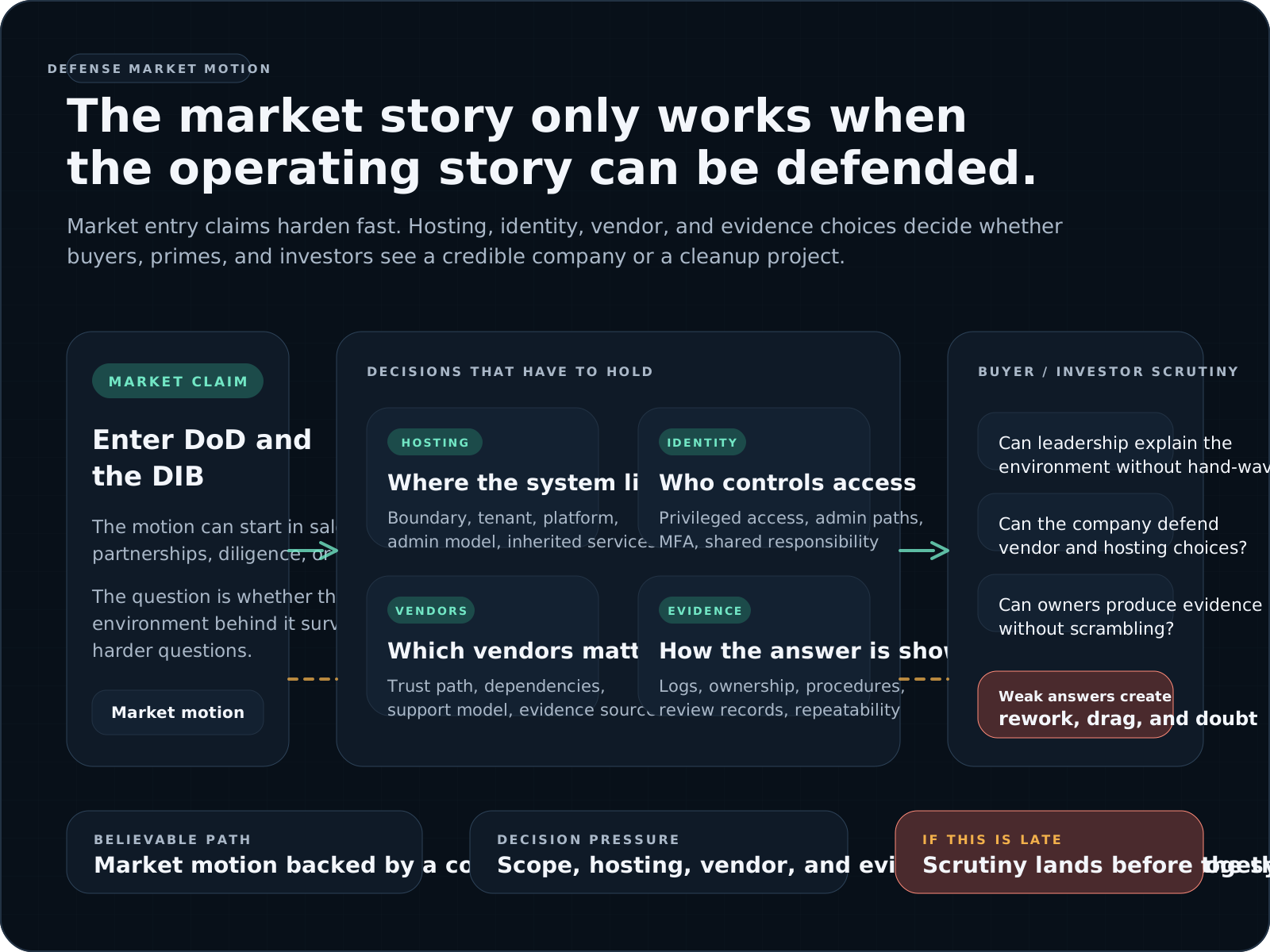
Fifth Season Advisors helps cybersecurity and technology companies avoid expensive mistakes as they move toward Department of Defense and Defense Industrial Base work. The focus is not paperwork. The focus is whether the company can defend its hosting, identity, vendor, evidence, and compliance decisions when buyers, primes, or investors start asking harder questions.

HostingIdentityVendor relianceEvidence
Decision diagram showing how market entry claims depend on hosting, identity, vendor, and evidence decisions under buyer scrutiny

Why buyers take this seriously

The firm is led by John Bergin, whose public record includes service as Deputy Assistant Secretary of the Army for Financial Information Management, prior work as the Department of Defense reform lead for IT and business systems and Business Technology Officer for the DoD CIO, Microsoft federal digital security leadership, and service as AFCEA NOVA Treasurer. That matters because buyers, primes, and investors eventually test whether the operating story holds up.
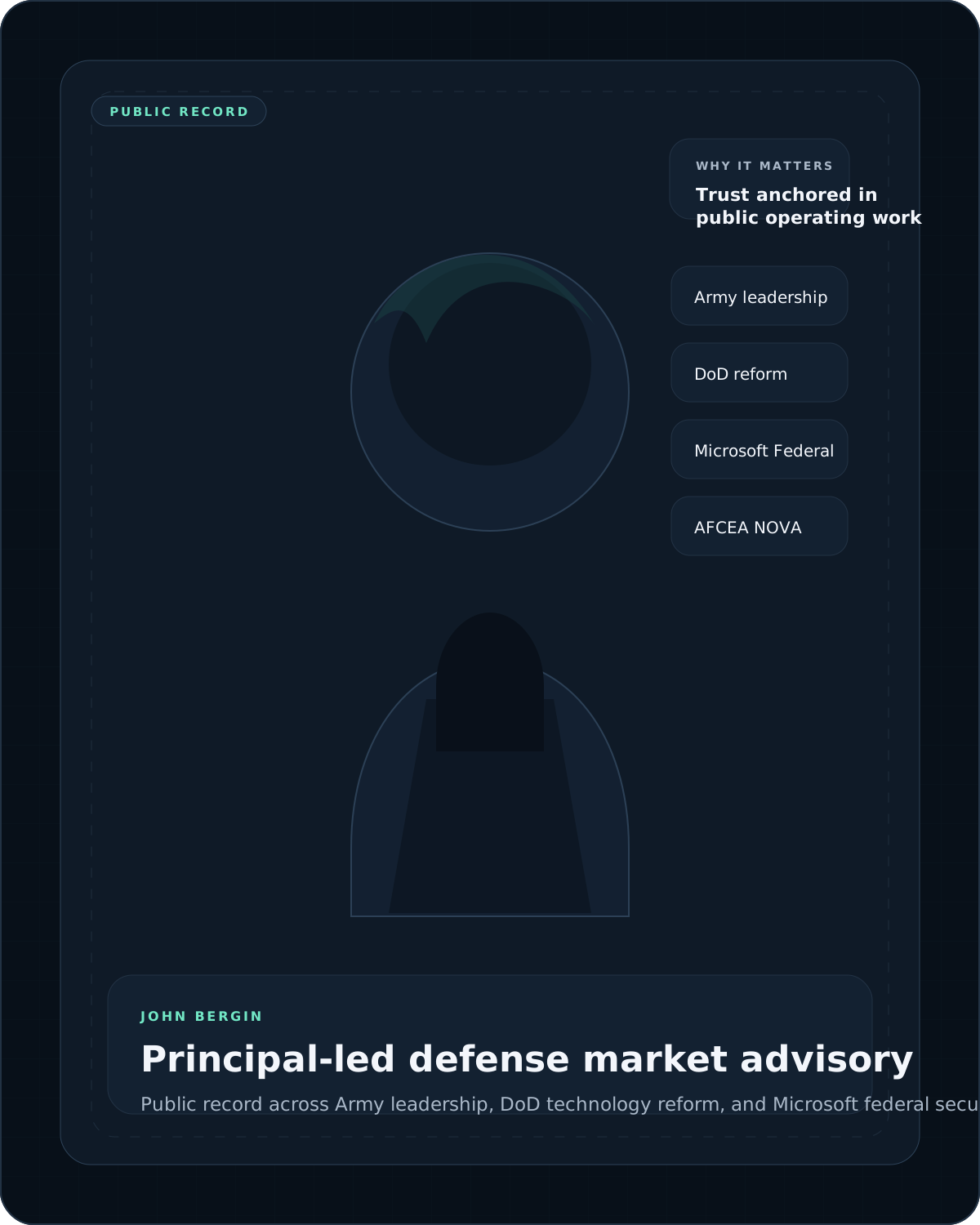
Portrait treatment representing John Bergin, founder of Fifth Season Advisors
John Bergin served as Deputy Assistant Secretary of the Army for Financial Information Management.
He previously served as the Department of Defense reform lead for IT and business systems and as Business Technology Officer for the DoD CIO.
His public profile supports Microsoft federal digital security leadership.
AFCEA NOVA publicly lists John Bergin as Treasurer.
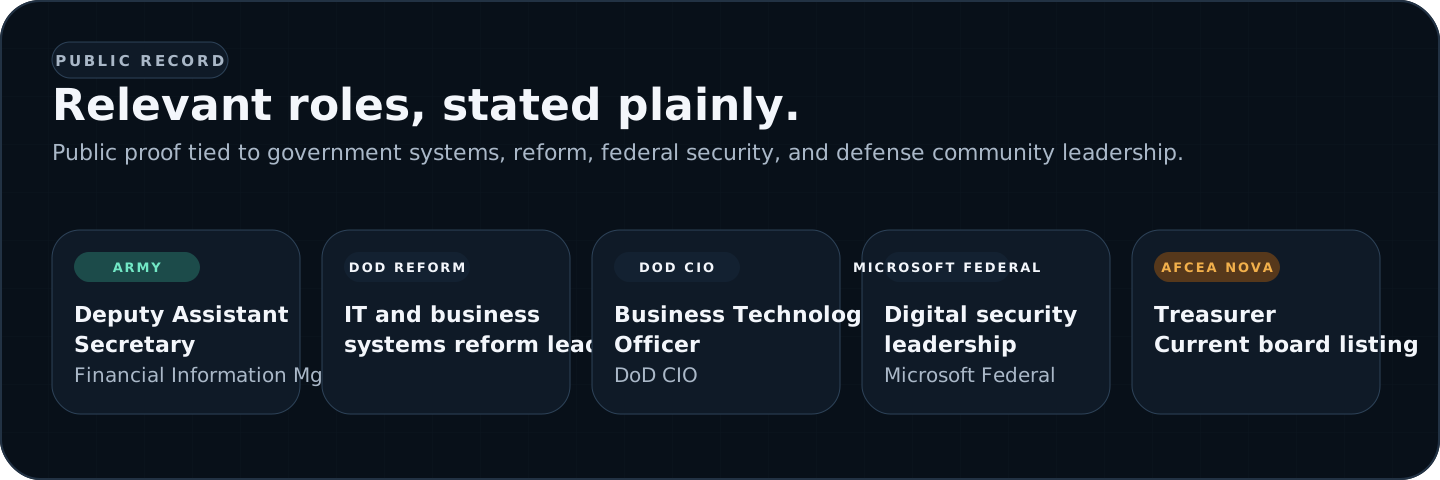
Public proof band summarizing Army, DoD, Microsoft Federal, and AFCEA NOVA roles

Defense market reality

Defense buyers do not just buy product. They look at whether leadership understands environment control, scope, evidence, and responsibility.

Compliance that matches the operating model

CMMC and FedRAMP work only helps when it fits the real architecture, hosting path, vendor stack, and ownership model.

Diligence that goes beyond claims

Investors and operators need to know whether the company can actually support the story it is telling.

Decisions that do not create rework

The wrong hosting, identity, evidence, or vendor choice gets more expensive later, not less.

Buyer pages

Choose the page that matches the problem

The site is built for five concrete situations: startups entering defense, investor diligence, CMMC decisions, FedRAMP decisions, and executive calls that carry real downside.

Startups entering defense

For founders and operators who need to know what has to be true before the company looks serious in the defense market.

Private equity and investors

For investors and portfolio teams who need to know whether a defense-adjacent growth story actually holds up.

CMMC advisory

For leadership teams that need CMMC direction tied to scope, ownership, evidence, and real operating constraints.

FedRAMP advisory

For teams making boundary, inheritance, hosting, and evidence decisions that will be expensive to reverse later.

Start with the page that matches the situation: startups entering defense, private equity and investors, CMMC advisory, FedRAMP advisory, or executive advisory.

What buyers ask

What defense buyers and investors eventually ask

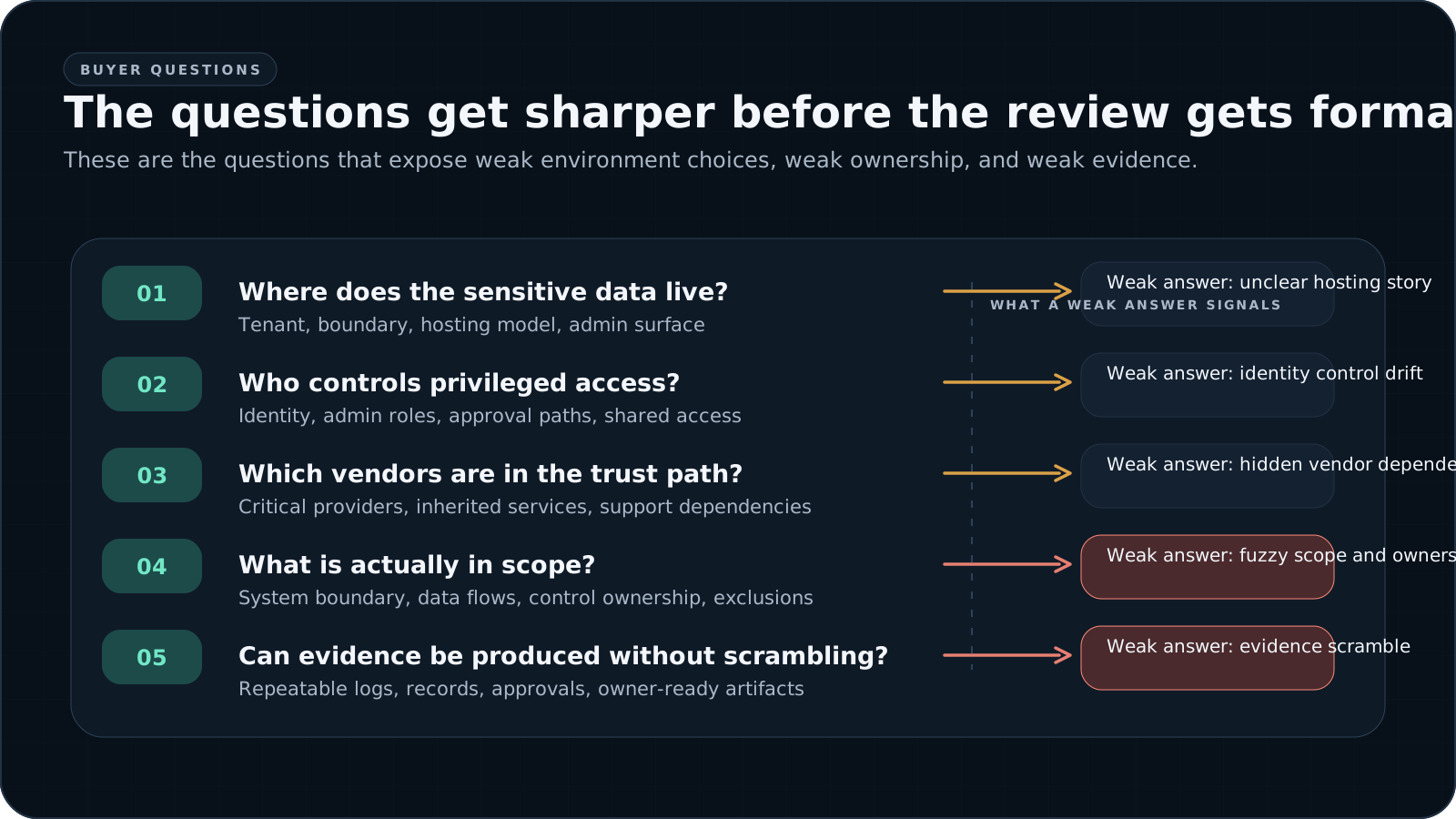
They ask where data lives, who controls privileged access, which vendors sit in the trust path, what is actually in scope, and whether the company can produce believable evidence. If those answers are weak, the problem shows up long before a formal assessment.

  • Where does the sensitive data live?
  • Who controls privileged access?
  • Which vendors are part of the trust story?
  • What is actually in scope?
  • Can the company produce evidence without scrambling?
Structured buyer-question model covering data location, privileged access, vendor dependence, scope, and evidence

Fit call

Use the fit call before the next decision gets expensive

The fastest way to waste time is to let a defense motion outrun the operating model behind it. Use the fit call to sort what matters now, what can wait, and where the current story is weaker than it sounds internally.

  • Decide whether the company looks credible enough for the market it wants
  • Sort the order of CMMC, FedRAMP, hosting, identity, vendor, and evidence decisions
  • See what holds up under scrutiny before buyers, investors, or partners do it for you
Embedded scheduler
Book directly on-page. Configure the scheduler to redirect back with ?booking=confirmed after completion.
Scheduler

FAQ

Plain answers before a call

The goal is to reduce ambiguity early, not create another layer of advisory language.

Who is the fit call for?

The fit call is for founders, operators, investors, and leadership teams who need a clearer view of scope, hosting, controls, vendors, evidence, or diligence before the next decision gets more expensive.

What happens after the fit call?

The call should end with a practical next step. That may be a startup market-entry review, an investor diligence read, or focused work on CMMC, FedRAMP, or executive decision support.

Is this certification or legal work?

No. Fifth Season Advisors provides advisory work tied to operating decisions, scope, ownership, evidence, and risk. Legal interpretation, certification, assessment, and attestation services are outside scope.

What should not be sent through the form?

Do not send controlled, export-restricted, classified, or otherwise sensitive information. A short business summary is enough to start.

Next step

Choose the faster next step

Book the fit call when the issue is ready for discussion. Use the form when the situation needs context first.