For private equity firms and portfolio operators

Do not underwrite a defense story that the operating model cannot support.

Defense-adjacent growth can look attractive long before the company is actually ready for the scrutiny that comes with it. Fifth Season Advisors helps investors and operators test whether the target can defend its environment, control ownership, vendor choices, hosting assumptions, and evidence story before those gaps turn into underwriting mistakes.

Investor lens

What investors need to know early

This work is meant to keep underwriting aligned with the actual system, not management optimism.

If the company is still shaping the market motion itself, start with Startups Entering Defense. If the pressure is already landing on scope, control, or architecture, move next to CMMC or FedRAMP.

Questions that matter first

  • Is the company overstating how credible it is for defense work?
  • Do hosting, identity, and vendor choices support the story being sold?
  • Can the company show clear ownership and evidence, or just policy language?
  • What breaks first when a buyer, prime, or diligence team looks closer?
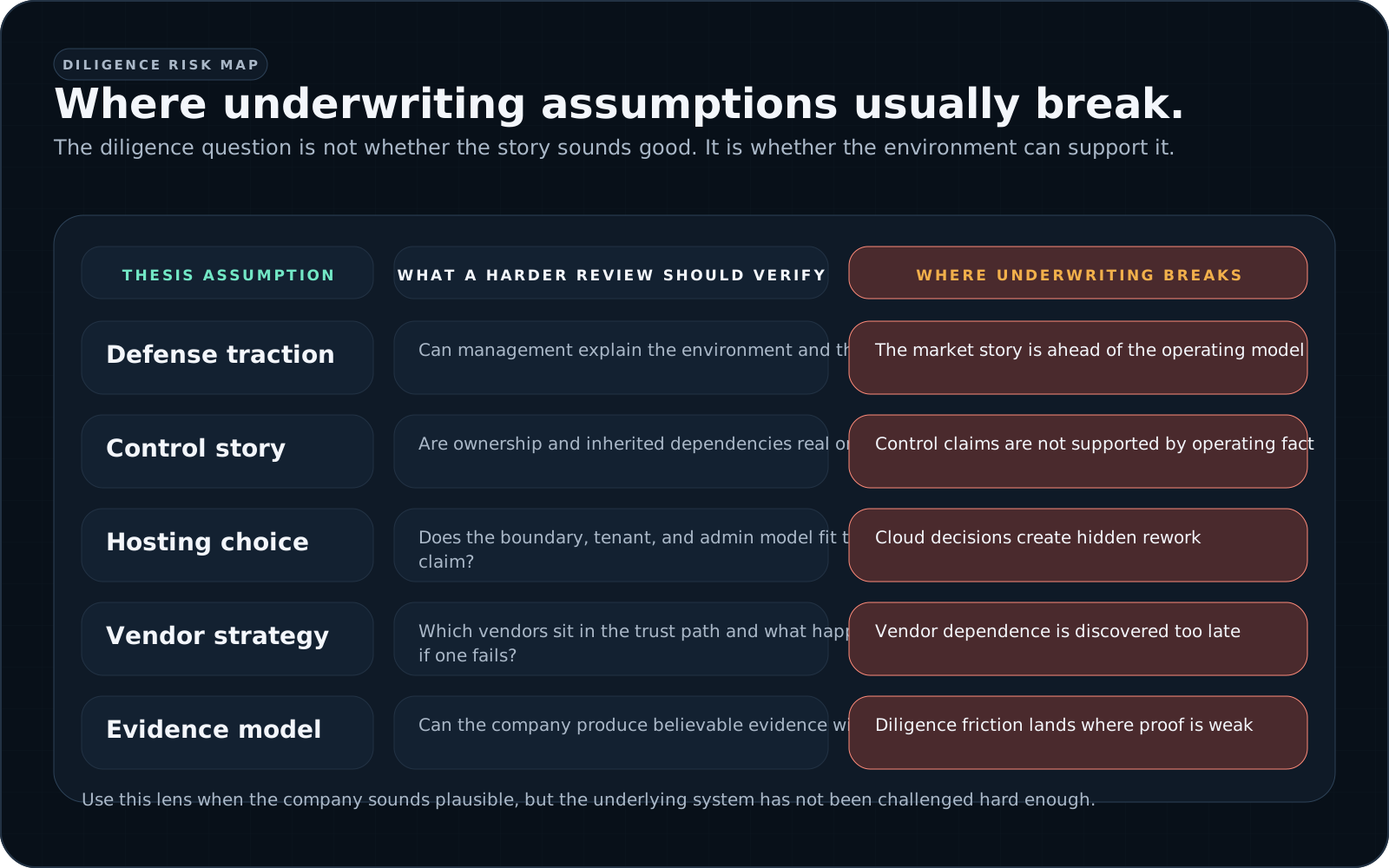
Private equity diligence map showing assumptions, validation points, and underwriting break points

What you should walk away with

This work should leave the deal team with a cleaner underwriting view: what holds up under scrutiny, what breaks first, and what has to change before the story becomes more supportable.

  • A diligence view of whether the defense growth story holds up
  • A clearer list of scope, hosting, vendor, and evidence risks
  • A direct view of what could create drag in diligence, partnerships, or post-close execution
  • A plain view of what has to change before underwriting the story more aggressively

Where underwriting usually goes wrong

  • Management treats certification language as proof the company can actually deliver
  • The real environment and trust path have not been tested hard enough
  • Evidence is fragmented and ownership is unclear
  • The company has momentum, but not an operating model that survives scrutiny

The value here is judgment shaped by public work in government systems, DoD reform, and federal security. That is what makes the work useful when the question is whether the company can support the story management is selling.

This is most useful before the investment thesis hardens around claims the company cannot support under buyer, prime, or diligence scrutiny.

Next step

See what breaks before the thesis hardens

The intake form is usually the better first step for investors because context matters. The fit call works well when the questions are already sharp.