For founders and operators entering defense

Do not build the wrong company for the market you want.

A strong product is not enough. Defense buyers and primes will judge whether the company can explain its environment, defend its hosting and vendor choices, and show a believable path for controls and evidence. The point is to avoid building a defense motion on top of weak operating assumptions.

Founders

What founders usually get wrong

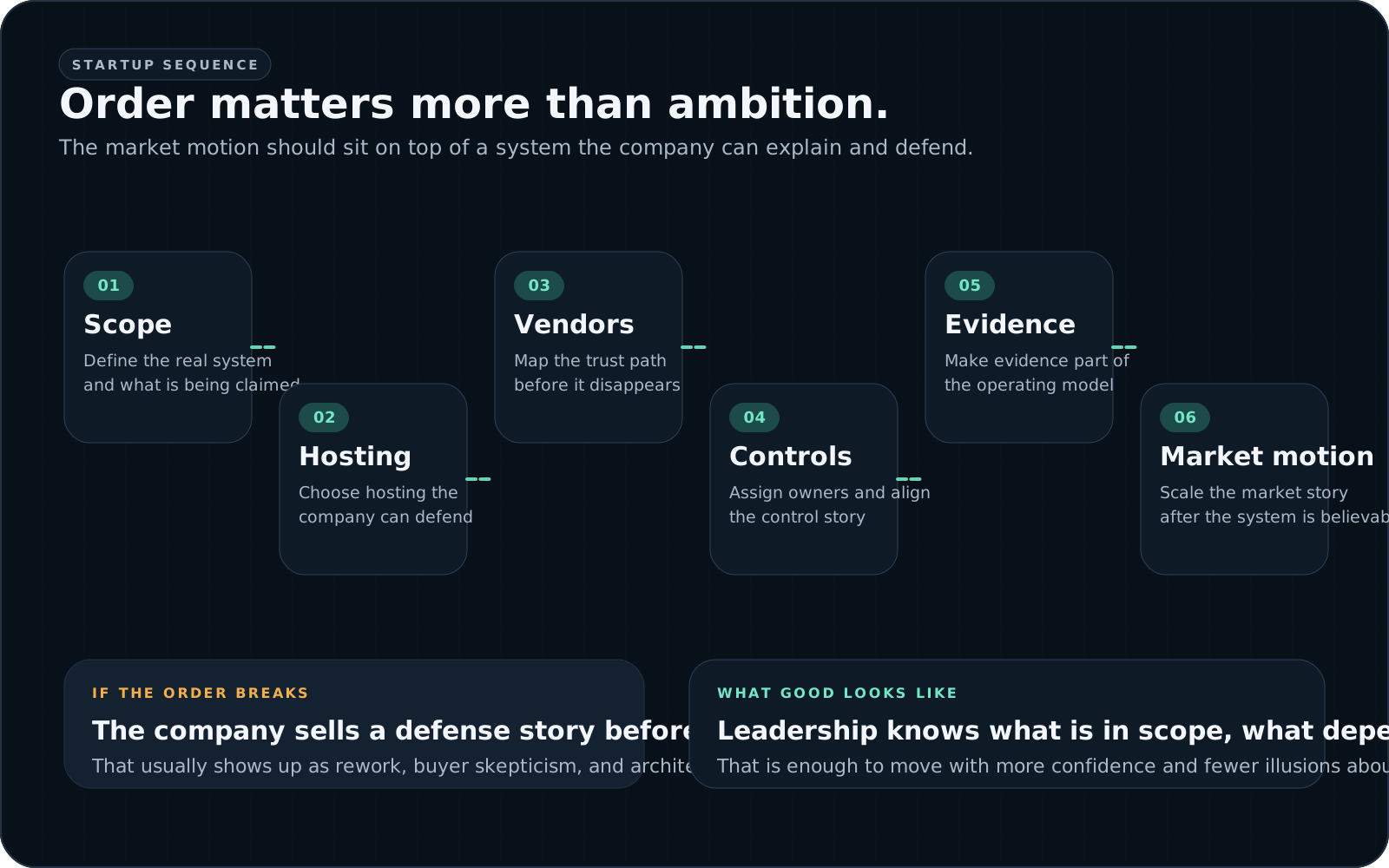
Most early mistakes are not about effort. They are about sequence. The company starts chasing defense work before anyone has decided what is in scope, what the environment needs to look like, which vendors sit in the trust path, and how the evidence model will actually work.

This page is about the system underneath the market story. When the pressure is already landing on scope, control, or executive sequencing, move next to CMMC advisory, FedRAMP advisory, and executive advisory.

Common failure pattern

  • Product and go-to-market move faster than environment design
  • Founders hear conflicting advice about CMMC, FedRAMP, and what has to come first
  • Hosting and identity choices get made for speed, not for downstream credibility
  • Nobody owns the full scope, ownership, and evidence picture yet

What founders should get clear now

The point is to leave with a sequencing view leadership can actually use: what has to be decided first, what can wait, and where the company is making claims the system cannot support yet.

  • What is in scope for the defense motion right now
  • Which hosting and vendor decisions matter before more selling happens
  • What needs an owner before control work spreads across teams
  • What evidence has to exist soon versus later
  • What breaks first if buyers, primes, or investors look closer

Ordered startup sequence for scope, hosting, vendor, control, evidence, and market-entry decisions

Outcome

What founders should walk away with

Founders should leave with a practical sequence, a clearer sense of what breaks first, and a shorter list of decisions that matter now.

When the situation already includes investor scrutiny, move next to the investor page. When the company needs a live discussion, the fastest path is still the 25-minute fit call.

What founders should walk away with

  • A founder-level sequence for scope, hosting, vendors, controls, evidence, and market motion
  • A clear view of what the company can defend now and what it cannot
  • A short list of decisions that need to be made this quarter
  • A more grounded path into CMMC, FedRAMP, or executive support if the pressure increases

This work is shaped by public experience across Army leadership, Department of Defense technology reform, and Microsoft federal security. That matters because defense-entry problems are not theoretical. They are operating problems.

Start here when the company is still shaping the motion. Move to CMMC advisory or FedRAMP advisory when the pressure is already landing on scope, boundary, or evidence design.

Next step

Get the sequence right before the market makes it painful

Use the fit call when the sequence is unclear. Use the form when the context needs to be laid out first.